Our purpose

A river worth protecting - and a solution worth fighting for.

Eyes on the Wye is a forum through which local communities have come together to monitor their part of the River Wye and to press Welsh Water to take action to stop sewage discharges.

The Wye Valley is an Area of Outstanding Natural Beauty stretching from Ross-on-Wye to Chepstow. It is an area of significant environmental importance, recognised as a Site of Special Scientific Interest with a focus on its biodiversity. A key feature of the river is that it is tidal up to Bigsweir Bridge, making it an important site for the spawning and movement of salmon - despite the collapse in numbers in recent years.

The importance of the River Wye running through the valley has been recognised by a number of councils and organisations coming together to grant it a Charter of Rights.

Despite all this, the condition of the river has been significantly impacted by sewage running into the system, as overflows spill from an outdated and under-invested network. Over the 12 months to June 2026 this saw:

Wye Valley · 4,000+ hrs of sewage Bigsweir · 1,300+ hrs in 12 months Bigsweir at worst · 11 hrs/day

After an investigation spanning several years, Ofwat found Welsh Water in breach of its responsibilities for managing the sewage system and issued a £40m penalty. In June 2026 it decided to allow Welsh Water to invest £45m in repairs rather than pay a fine.
Welsh Water have to file an updated plan for repair and investment - so we must press them to include the Wye Valley in those plans.
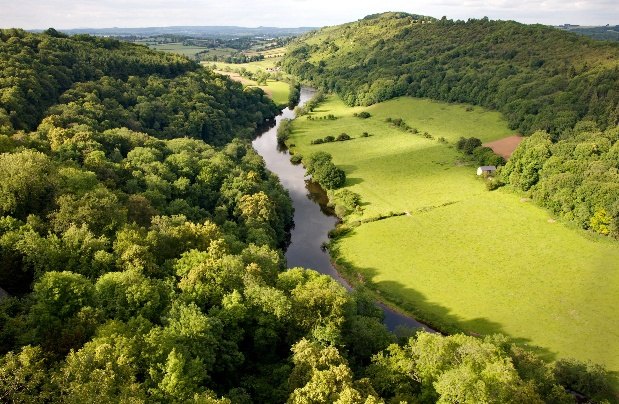
Aerial view of the River Wye winding through the wooded Wye Valley
The Wye Valley · an Area of Outstanding Natural Beauty
Our objectives

Monitor the overflows. Prove the harm. Push for change.

By focusing on the impact of individual overflow discharges, we campaign for investment in specific problems and work to prevent sewage entering our environment.

  1. Call for repair to the systems impacting our communities

    We are urging Welsh Water to stop sewage discharging into the Wye Valley and commit to the following:

    Call for a clear plan to repair the other systems discharging into the Wye Valley AONB

    • The St Briavels overflow has discharged sewage overflows for over 1,800 hours since January 2025.
    • At its worst this amounted to 11 hours per day in December 2025.
    • This is despite evidence to Ofwat that the system would be repaired by work being completed in December 2024.
    • The Wyelands overflow discharged into the Wye at Monmouth 166 times in the first half of 2026, for over 700 hours.
    • The Newlands overflow discharges into the Wye in the middle of Redbrook - recorded for over 750 hours in 2025.
    • Sewage is discharged in the middle of Tintern, within sight of the iconic Tintern Abbey, with several incidents recorded as being over 24 hours at a time.

    Stop foam being discharged into the river

    • Foam from overflow pipes has become a common problem.
    • The foam is highly visible, impacts the environment, and leaves residues in the river and on the banks.

    Add monitoring to all other overflow pipes

    • The data DCWW share for discharges only cover pipes with Electronic Discharge Monitoring that captures data automatically.
    • Other pipes could be discharging into the river with no monitoring, reporting or consequence.
    • DCWW should share information on all sites along the river, such as at Llandogo, with their reporting status to help inform communities
  2. Wider testing

    We are setting up testing teams in the communities affected to sample the water coming from overflow pipes - checking that overflows are properly reported, assessing environmental harm, and testing pipes left out of existing monitoring. How we test →

  3. Increased reporting

    We are liaising with communities to report and track signs of sewage discharge to NRW for investigation, so we can build a heat map, validate whether action is taken, and carry out independent local testing. How to report →

Turn research into action

We all need eyes on the water.

See how our testing and reporting build the case for each of these goals.